How to check a football match-status announcement
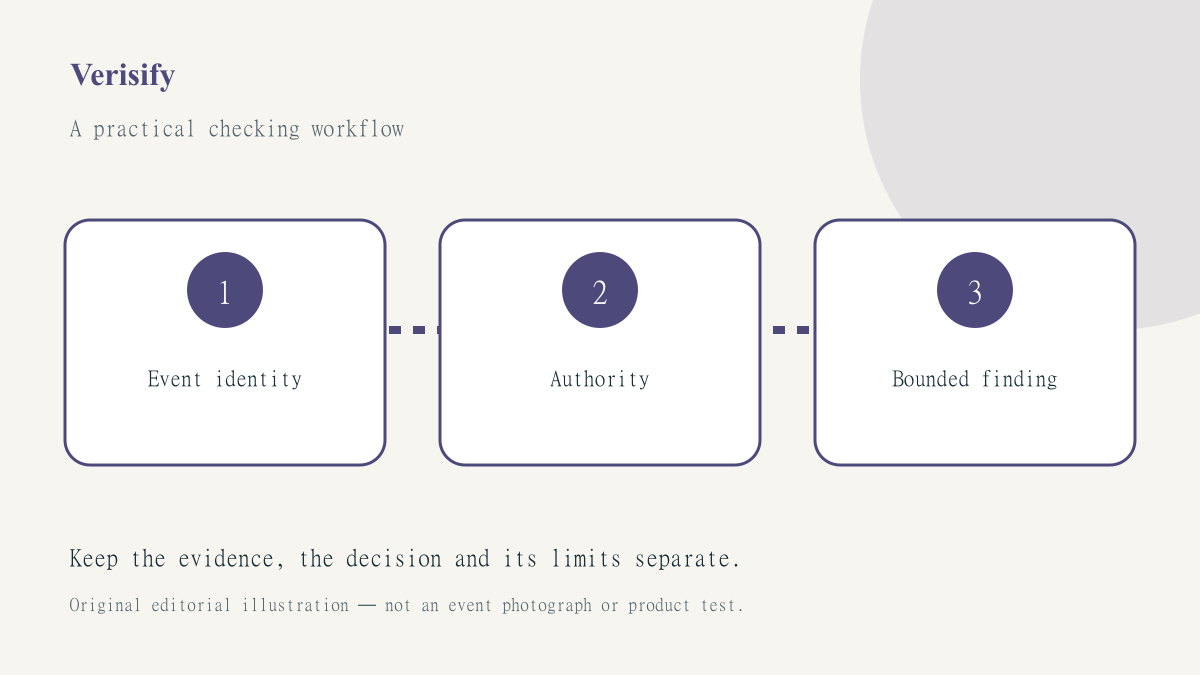
A claim that a football match is off contains several questions disguised as one. Which event is meant? Has a decision been made, or is someone discussing a possibility? Does the statement concern the sporting fixture, a venue screening or a person’s own plan? A reliable check begins by separating those questions before deciding what can be repeated.
The postponed and abandoned match guide provides the source distinction. This Verisify article focuses on the evidence record behind a status claim. It does not announce a current fixture change or interpret ticket, travel or refund entitlements.
Create an identity card for the claim
Record the competition, participants, scheduled date and location described by the message. A screenshot can omit the season or contain a similar team name. Before investigating the status, make sure that the statement refers to the event the reader actually means. An authentic announcement about another fixture remains misleading when applied to the wrong one.
Separate the message’s observation time from the event date. A recently forwarded image may carry an older announcement, and words such as tomorrow can lose their reference point. Preserve the original source URL and visible date where possible. If those are unavailable, state that limitation rather than silently reconstructing a date from the surrounding conversation.
Identify who could make the decision
Use the fixtures and results listing to identify the event, then locate the responsible competition, club or organiser’s current information. Ask what authority the particular source has over the claim. A venue may decide not to show a programme without deciding whether the sporting event takes place.
Do not rely on branding alone. A copied logo, plausible account name or professional layout can help someone present a message, but cannot establish its authority. Follow a genuine published route to the source instead of contacting an unfamiliar address introduced only by the disputed notice. Keep the source and the claimed decision together in the evidence card.
Distinguish confirmed, pending and inferred
Use clear status labels based on the actual wording. A statement that a pitch inspection is planned does not itself announce the inspection’s outcome. A report that discussions are taking place does not establish a replacement date. Quote only the minimum wording needed to explain the distinction, then describe the supported conclusion in your own language.
Record what remains uncertain. A useful check may establish that an original start is no longer current while leaving the replacement arrangement unresolved. Do not fill the gap with a likely date, an old schedule or an assumption that the same broadcasting plan automatically follows the new fixture. Precision is more useful than appearing to have a complete answer.
Check related viewing claims independently
The broadcaster-by-country checklist is a separate investigation. A sporting announcement may settle a fixture’s status without confirming a particular live programme in a particular country. Keep programme selection, live/replay status and venue arrangements in separate fields rather than letting one valid source approve the whole plan.
For a hypothetical community outing, the evidence card might show fixture change confirmed, broadcaster listing pending and venue decision not checked. That is not a failed investigation; it is an honest account of three different questions. The next action should address the missing evidence rather than circulate a broader conclusion than the sources support.
Publish a bounded correction
A useful correction identifies the disputed claim, gives the responsible source and explains the specific change. Avoid accusing a person of deliberate deception when the evidence establishes only that their information was old or incomplete. Keep earlier versions in a controlled record where needed, and make the current version discoverable from the original controlled notice.
Retain a last-check time and a review trigger, such as a promised further announcement, rather than refreshing a date automatically. Another person should be able to follow the source and see why the conclusion was reached. The record should distinguish verification actually performed from work merely planned.
Use SportsFixtures to explore the event context, while keeping the responsible announcement central to the decision. Our verification and corrections policy follows the same rule: make the claim narrow, preserve its evidence and leave unresolved questions visible. A careful status check does not need to pretend it has settled every consequence of a changed match.